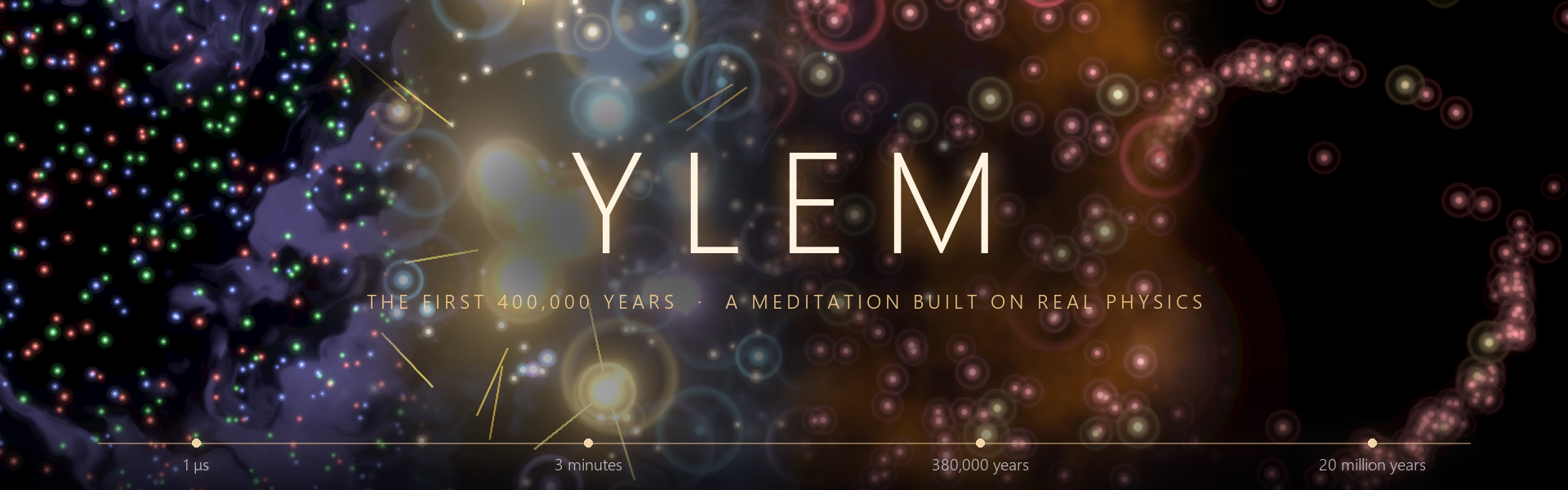
Ylem: The First 400,000 Years
A downloadable game for Windows
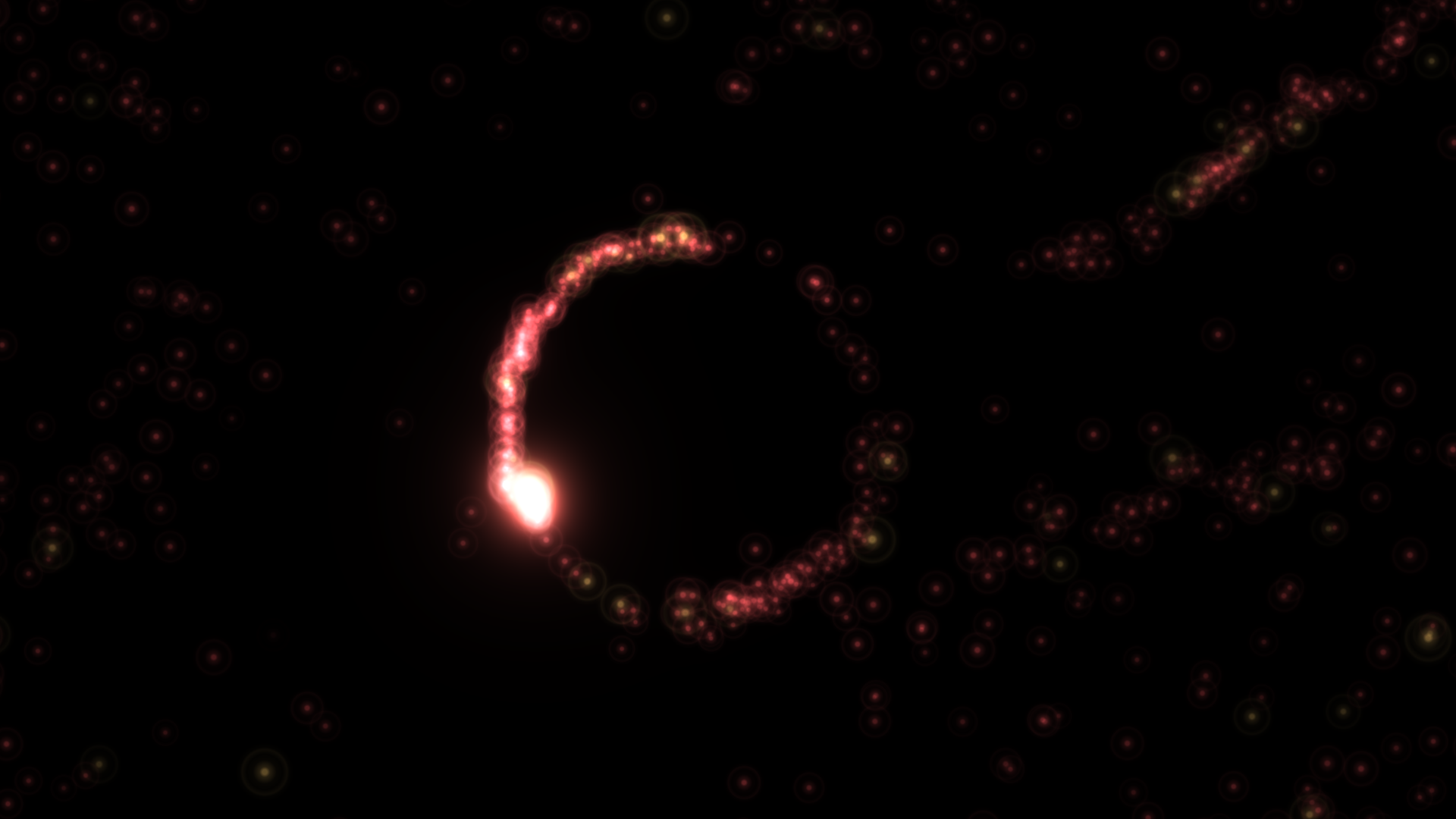
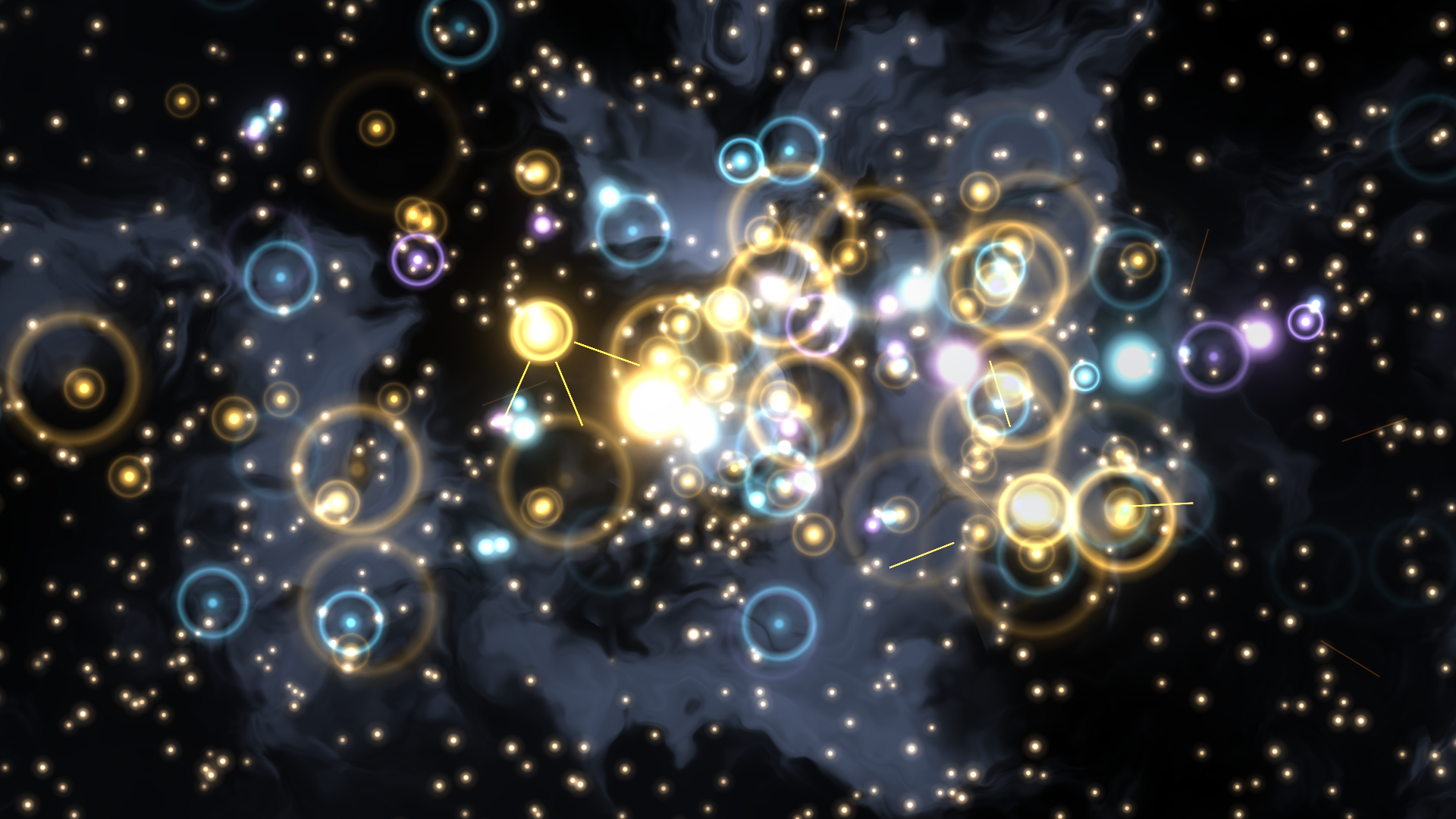
The first microsecond. Quarks and gluons roam free, and matter does not yet know what a particle is.
Ylem is a meditation built on real physics: a short journey through the first 400,000 years of the Universe. You don't win or lose. You tune, touch and watch as matter evolves: quarks bind into protons and neutrons, the first nuclei fuse in a few frantic minutes, and finally electrons settle into the first atoms, the fog clears, and the light of the Big Bang goes free.
Ylem (“eye-lem”) is the name George Gamow and Ralph Alpher gave in 1948 to the primordial substance of the Big Bang, the hot soup of particles from which the first elements were forged.
What you do
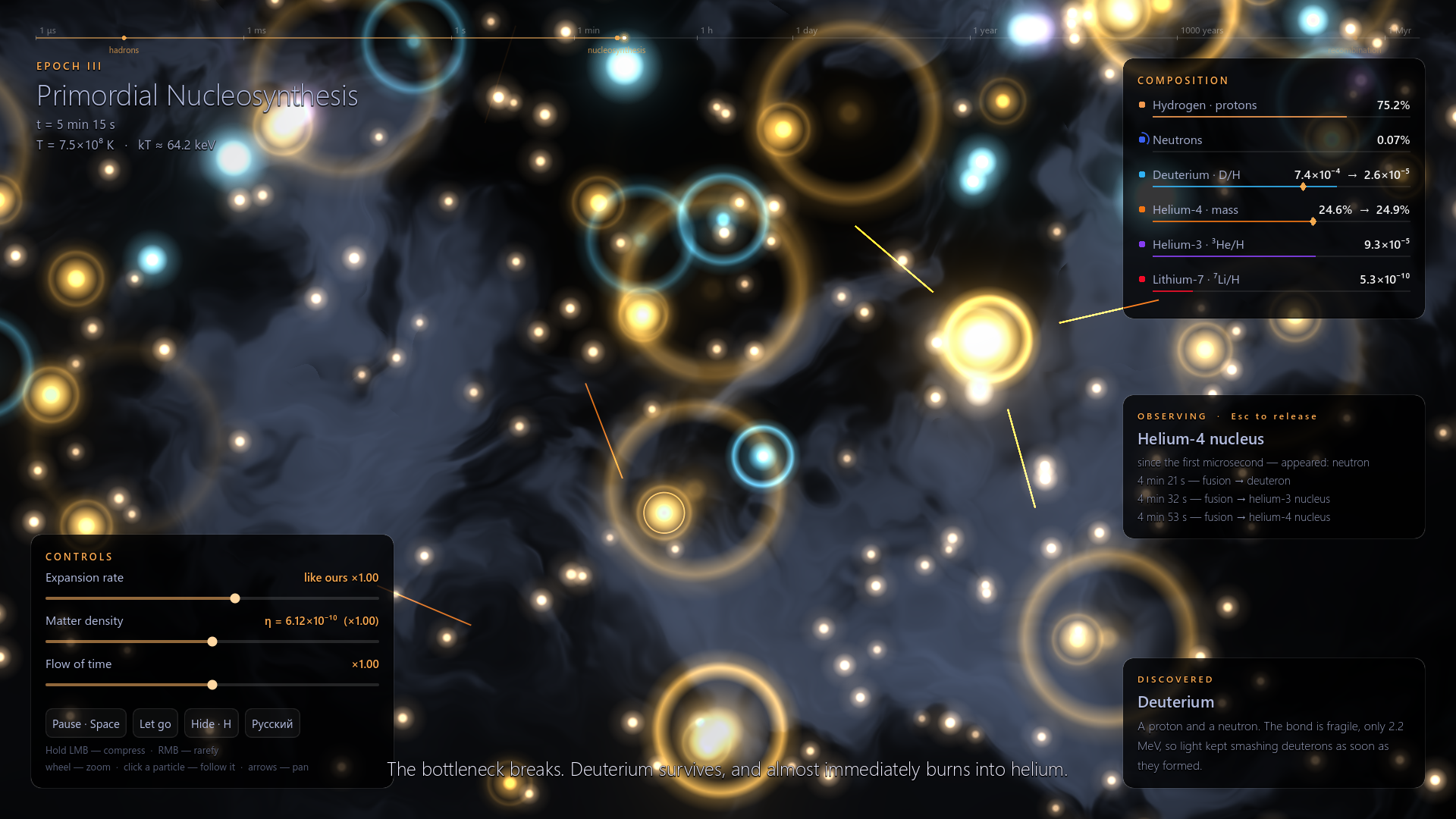
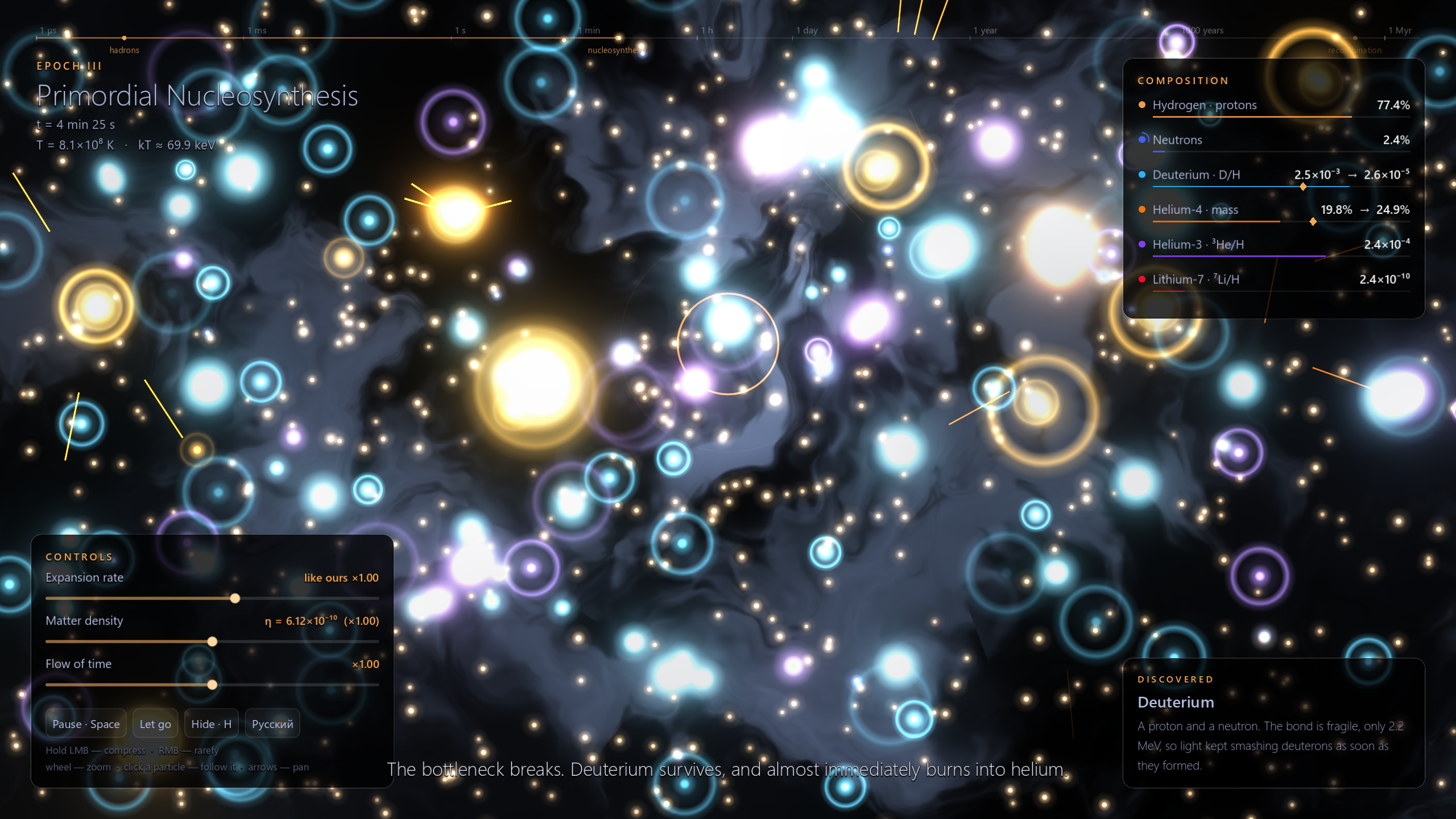
- Shape the cosmos. Change how fast space expands and how dense matter is. Expand too slowly and neutrons decay before they can be captured; expand faster and you get a helium-rich universe. A live forecast shows where your choices lead.
- Touch the plasma. Hold the mouse to compress and stir matter, and watch reactions flare beneath your hand. Your touches become density fluctuations: they reappear as cold spots in the cosmic microwave background, and in the Dark Ages gravity gathers matter there, the birthplaces of the first stars.
- Follow a single particle. Click any proton and trace its whole life: born from three quarks, fused into deuterium, hidden inside helium, finally wrapped in an electron cloud.
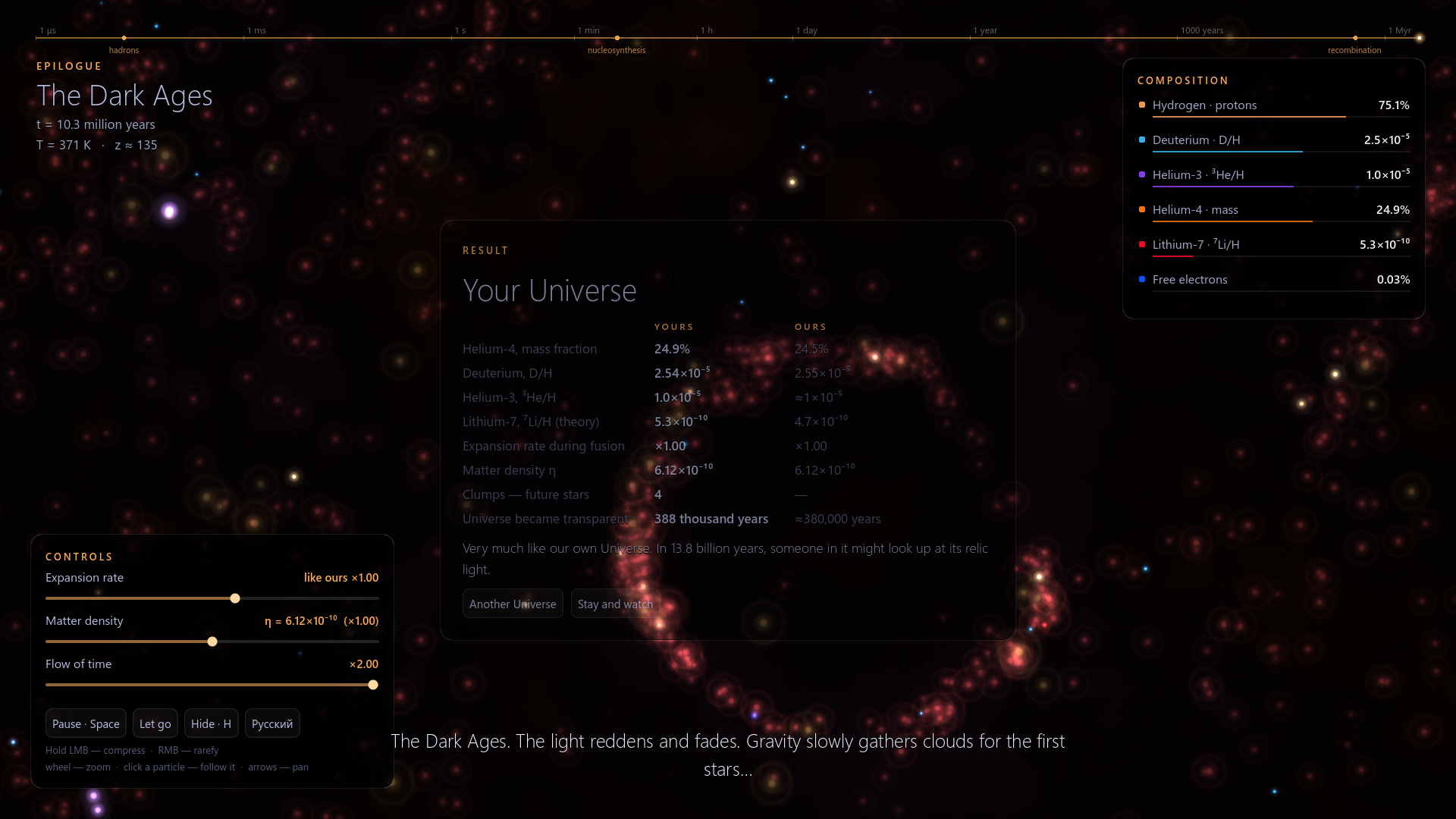
- Compare with reality. At the end, see your universe side by side with ours: its helium, deuterium and lithium, and when it became transparent.
Real physics, gently presented
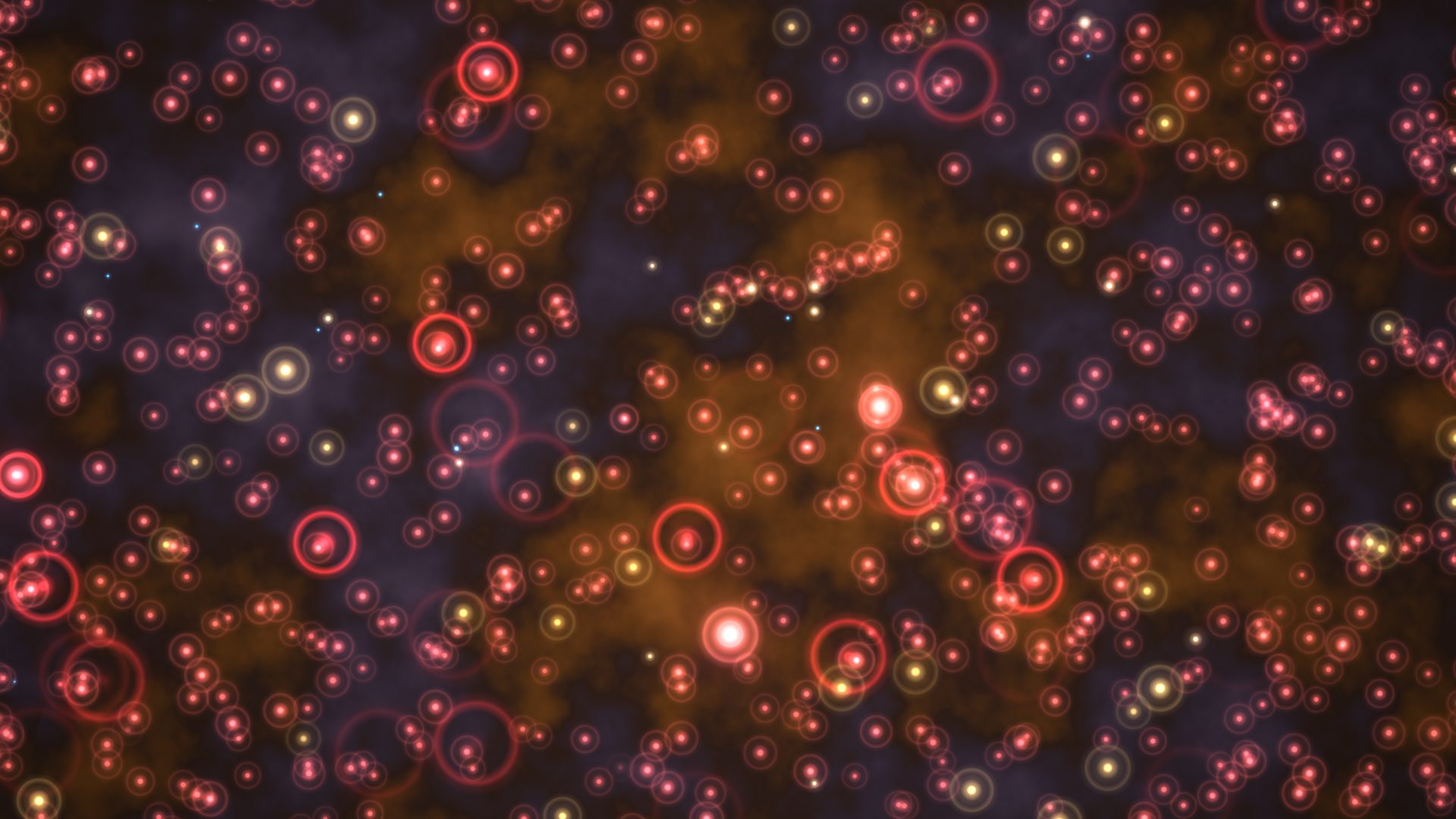
Under the glow there is a working cosmological model, checked against current measurements (PDG 2024, Planck 2018). The weak interaction freezes out, the deuterium bottleneck holds and then breaks, and hydrogen recombines with the delay of the Peebles equation. With our Universe's parameters the model gives 24.8% helium by mass and D/H = 2.54×10⁻⁵. The real values are 24.5% and 2.55×10⁻⁵. The colours are blackbody colours. Even the sounds are spectral: each new hydrogen atom chimes with the real H-alpha and H-beta lines, transposed 40 octaves down into hearing range.
Features
- 4 epochs plus an interlude and an epilogue, about 5–8 minutes per universe
- No fail states; endless "what if" universes
- Codex cards for every new particle
- Hide the interface (H) and just watch
- English and Russian
Controls
| Hold left mouse | compress and stir the plasma |
| Hold right mouse | rarefy it |
| Click a particle | follow it (Esc to release) |
| Mouse wheel | zoom |
| Middle mouse / arrows / WASD | pan |
| Space | pause |
| H | hide interface |
| F / F11 | fullscreen |
Notes
- Windows 10/11, 64-bit. Needs a GPU with Vulkan support.
- The game is unsigned, so Windows SmartScreen may warn you on first launch: click "More info" → "Run anyway".
- Made with Godot 4.
Download
Click download now to get access to the following files:
Leave a comment
Log in with itch.io to leave a comment.